Wednesday, March 7, 2018

Nutrients 101

If you listen to all of the hype on talk shows and the internet, you might be confused about what is actually nutritious.  To help you decipher the hype here is some basic nutrition information.


What is a Nutrient?
There are two main types of nutrients: macronutrients and micronutrients. Macronutrients provide structural material and energy. They also make up the bulk of what most people eat each day. Protein, carbohydrates, and fats are all macronutrients.  Macronutrients contain calories.

Micronutrients are needed in smaller amounts and include vitamins and minerals. Micronutrients don’t drive the calories in your diet, but they do have a significant impact on your health. Getting the proper balance of vitamins and minerals in your diet is very important.

Both micronutrients and macronutrients are essential to good health and a balanced eating pattern.

Meet Protein
Protein provides 4 calories per gram and helps your tissues grow, bolsters immune function, and aids hormone and enzyme creation. Most people get their protein from chicken and beef, but there are tons of other sources of protein out there! MyPlate recommends eating a variety of protein foods each day.  A serving of protein should contain around 21 grams.  Most of us should not eat more than 50 grams in a day. Consider...
  • Beans
  • Shellfish
  • Lentils
  • Fish
  • Eggs
  • Tofu
  • Peas
  • Poultry
  • Nuts
  • Pork
  • Seeds
  • Beef
Meet Carbohydrates
Carbohydrates provide 4 calories per gram and are your body’s primary fuel source. There are two different types of carbohydrates. Simple carbohydrates are also known as simple sugars, while complex carbohydrates are made of strings of simple carbohydrates.  Fruits, vegetables and whole grains are complex carbohydrates and in addition to fiber they are good sources of micronutrients.

Carbohydrates are vital to a healthful eating pattern. Some are just more healthful than others. Steer clear of high-carbohydrate foods that are also loaded with empty calories like cupcakes, candy, and refined grain foods. Instead, stock up on whole grains, fruits, and vegetables.

Meet Fat
Fats provide 9 calories per gram and help keep your skin and hair healthy, as well as insulating your organs. Fats also help regulate body temperature and healthy cell function. Like with carbohydrates, there are different types of fats.

Saturated fats raise your total blood cholesterol and your LDL (a.k.a. bad) cholesterol. They endanger your heart and your overall health. Trans fats raise your LDL cholesterol and lower your HDL (a.k.a. good) cholesterol. They also increase your risk of type II diabetes, heart disease, and stroke.

Unsaturated fats are good for you when consumed in moderation. Monounsaturated fats improve cholesterol levels, insulin regulation, and blood sugar control, while polyunsaturated fats decrease your risk of heart disease and diabetes.  Choose Olive Oil, Canola Oil, Avocados, and Nuts more often.

Micronutrient Spotlight: Vitamins
Vitamins play myriad roles in your body. Some bolster immune function while others help your blood clot the way it should, and still others boost nerve health. There are 13 different vitamins out there, including...
  • Biotin
  • Folate
  • Niacin
  • Pantothenic Acid
  • Riboflavin
  • Thiamine
  • Vitamin A
  • Vitamin C
  • Vitamin B6
  • Vitamin B12
  • Vitamin D
  • Vitamin E
  • Vitamin K
A Key Vitamin: Folate
Folate is a B vitamin, and the man-made form of it is called folic acid. You can find folate in beans and peas, dark green leafy vegetables, and oranges and orange juice. Folic acid, on the other hand, has been added to a bunch of fortified grain foods.

Micronutrient Spotlight: Minerals
There are two kinds of minerals: macrominerals and trace minerals. You need larger amounts of macrominerals. They include calcium, phosphorus, magnesium, sodium, potassium, chloride and sulfur. You only need small amounts of trace minerals. They include iron, manganese, copper, iodine, zinc, cobalt, fluoride and selenium.  Minerals carry out a variety of roles in your body, doing everything from helping create hormones and enzymes to boosting the health of your brain.

Key Mineral: Calcium
Calcium is a mineral that is vital to good health. You can find it in most dairy products, especially milk and yogurt. Dairy foods like butter and sour cream don’t have enough calcium to be considered good sources of this nutrient, while other foods (like cereal) don’t have any calcium at first, but are then fortified with this important mineral.

How Many Nutrients Do I Need in a Day?
The answer to that question varies from person to person and nutrient to nutrient. In fact, that's where percent daily values come in. If you check the Nutrition Facts panels of the food you buy, you will see a percent daily value listed by the nutrients. That's roughly how much of your daily nutrient needs that food contains, broken up by category.

How Can I Get Enough Nutrients Each Day?
Eating a variety of nutrient-dense foods that are low in empty calories is a great way to meet your nutrient needs each day. Follow MyPlate and the Dietary Guidelines for Americans for delicious and nutritious ways to improve your eating pattern.

Adapted from: 10 Things You Should Know About Nutrients

Tuesday, March 6, 2018

Selecting Healthy Breads


  • Check added sugars: Bread and rolls can contribute a significant amount of sugar to the diet. As new Nutrient Facts labels are phased in, it will be easier to compare the relative amounts of added sugar among different breads.

Selecting Healthy Bread

Monday, March 5, 2018

How To Calculate Added Sugar

The Dietary Guidelines for Americans recommend that people “Consume less than 10 percent of calories per day from added sugars.”  This recommendation can be hard for people to apply in their daily lives.  Most of us struggle with calculating our total calorie intake and then what 10% of that number would be. But how do we know how many grams that is.  Nutrition facts labels, show added sugars in grams. 

Here is how you do the math to determine the amount of sugar for yourself.
  • The average daily calorie intake for most Americans is roughly 2,000 calories per day.
  • Calculate how many calories make up 10% of that daily intake.
  • Convert the number of calories to grams of added sugars so that people could easily calculate how much a food would impact this upper limit by using the Nutrition Facts label.  There are 4 calories per gram of sugar.
  • Convert that amount to teaspoons of sugar to help you visualize how much sugar that is.  There are 4 grams of sugar in a teaspoon.
A person eating 2000 calories a day, should get no more than 200 calories per day from added sugars. That’s only 50 grams of added sugars per day! Since there are 4 grams of sugar in a teaspoon, that comes out to only 12.5 daily teaspoons.

As you eat sweetened foods read the labels to see how much added sugar is in the food.  If you add sugar to a food, remember each teaspoon is equal to 4 grams of added sugar or 16 calories.

Sugar Math Misconceptions

Sunday, March 4, 2018

MIni Microwave Frittatas

This vegetable-filled Italian-style omelet is surprisingly easy and fast. For convenience, you can use 1 cup frozen stir-fry pepper mix instead of fresh onion and red pepper, or leftover cooked vegetables.
Coat two 6-oz custard cups with cooking spray.   Sprinkle each custard cup with 1 tsp Japanese-style breadcrumbs (panko), tilting to coat evenly.

Heat 1 tsp olive or vegetable oil in medium nonstick skillet over medium-high heat.  Add 1/2 cup chopped onion and 1/2 cup chopped red bell pepper; cook, stirring, until softened, 3 to 5 minutes.  Add 2 cups baby spinach; cook, stirring, until it has wilted, about 1 minute.  Divide between the two custard cups

Blend 2 egg in medium bowl.  Stir in 1/4 cup shredded Swiss cheese, a dash of hot sauce, such as Tabasco, a pinch of salt, and pepper to taste.   Divide egg mixture among prepared custard cups.

Place in microwave, cover with wax paper and microwave at High 1 1/2 to 2 1/2 minutes, or until frittatas have set. (They should be firm to the touch.)  Loosen edges and tip frittatas onto plates.

If you have an extra frittata, cover and refrigerate for up to 2 days. Reheat in microwave at High for about 1 minute, then unmold.

Yield: 2 servings.


Saturday, March 3, 2018

Are Coconut Oil and Refined Coconut Oils healthy choices?

With all of the new internet hype around coconut as a miracle cure for almost everything, there has been an influx of coconut products for sale in the grocery stores.  In addition, recipes using coconut oil are flying around the internet especially on blogger sites touting healthy foods.

In addition to there is a push for everyone to choose healthy plant based oils and coconut is a plant.  So why is coconut oil not a healthy choice?

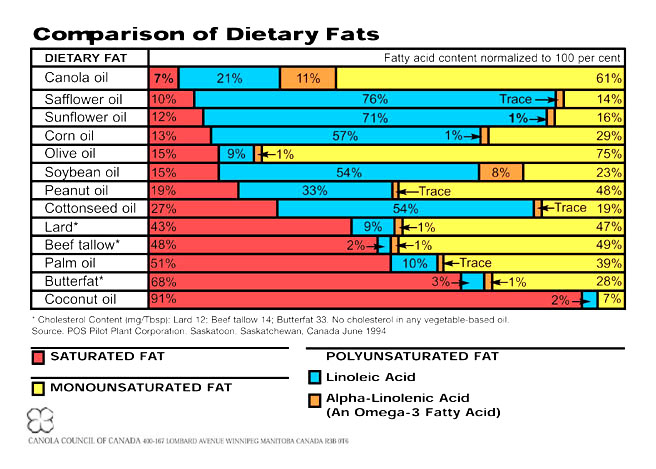
Coconut oil is a plant-based fat that is about 90% saturated, higher than butter or the fat associated with meats, and much higher than other plant-based fats such as olive oil or canola oil. Lipids or fats that are high in saturation are considered unhealthy choices because they tend to raise LDL ‘bad’ cholesterol levels in the blood which increases the risk of heart disease. 


This chart shows the amount of saturated fat the different oil have.  The American Heart Association recommends aiming for a dietary pattern that limits saturated fat to 5% to 6% of calories, or about 13 grams of saturated fat per day (from all sources) for a 2,000 calorie-a-day diet.  We should use Olive Oil or Canola Oil for most of our cooking.  The Academy of Nutrition and Dietetics recommends the use of coconut oil in moderation.

What about refined coconut oil, is that a healthier choice?  As fruits or seeds are pressed to release oils, certain impurities such as proteins, carbohydrates, phenolics and unwanted flavor compounds can end up in the oils. These ‘impurities’ are not harmful, but they can limit the shelf life of the product.  Refining of oils removes impurties and stabilizes the oil, but does not create a healthy(ier) product.  The bottom line: for heart-health, limit your intake of coconut oil and other saturated fats and oils.

Information for this article came from this blog.  For more details, click here Safe and Healthy Blog

Thursday, March 1, 2018

Tips for Getting Dinner on the Table During Busy Nights

For many people getting meals on the table on busy weeknights is one of their major stumbling blocks on the road to good health.  Here are a few simple things that you can do to streamline the process and make it easier to prepare weeknight meals.

Strategy #1: Tune Up Your Pantry
If you can't find the food you've stocked, it won't be useful for your weeknight dinners. Overcrowded and messy pantries can make it harder to find what you need as you set out the ingredients for a meal you'd like to cook, and they also create a vicious cycle where you can't find an ingredient that you actually have so you buy it again and add to the clutter that blocked you from seeing the ingredient you needed in the first place.

To give your pantry a deep cleaning, work shelf-by-shelf.  Pull everything off of one shelf, dust away any trash and give the empty shelf a good scrub. Then look at everything you took off that shelf, toss anything that's expired, and donate anything that's not perishable but which you won't use. Organize the rest into categories that make sense to you and put them back in the pantry.  Repeat this process with the remaining shelves.

Strategy #2: Check Your Herbs and Spices
Make sure that the herbs and spices you use most regularly are easily accessible -- eliminating the search for key ingredients will make weeknight cooking a little easier, and every little bit helps.Also, herbs and spices can lose flavor over time, so check your expiration dates and give each jar a sniff to make sure that everything is still aromatic and fresh. Replace any stale spices -- this will help you prepare more flavorful meals that are more likely to be accepted by your whole family, picky eaters and all. Dull spices can ruin a recipe!

Strategy #3: Stock Your Freezer
When you make a recipe, consider doubling it and freezing the rest for another night when all that you have the energy for is removing and reheating. After a few doubled recipes, you'll be well on your way to a stocked freezer that you can rely on in a pinch.
For the complete article with links to additional information see this article from the Food and Health Newsletter.  3 Tips for Easier Weeknight Meals